
A blockchain is a shared record of operations grouped into cryptographically linked blocks, maintained by many participants rather than by a single entity. Each block contains a fingerprint of the previous one, so altering an old entry would require redoing everything after it and would be detected immediately.
Blockchain, the technology that has revolutionized the way we think about security and transparency in digital transactions, has become a central issue in the world of technology and finance. Throughout this extensive article, we will explore in a simple way and in detail what blockchain is and how it operates in a simple way to provide a clear understanding of its fundamentals.
What is Blockchain?
Blockchain technology is based on a decentralized data structure that allows the creation of secure and transparent records. In essence, blockchain is a chain of interconnected blocks, each containing specific information. These blocks are linked and secured using cryptography, thus creating a network resistant to manipulation and corruption.
The concept of blockchain emerges as a response to the need for trust in digital transactions without relying on centralized intermediaries. Unlike traditional databases, which are managed by a central entity, a blockchain is distributed among multiple nodes of the network, ensuring decentralization and resistance to failures.
History of Blockchain: Evolution and Origins
The idea behind blockchain technology was described in 1991, when scientists Stuart Haber and W. Scott Stornetta introduced a computationally practical solution for time-stamped digital documents so that they could not be modified or manipulated.

However, for practical purposes, the use of blockchain technology dates back to the introduction of the concept in the Bitcoin white paper, published in 2008 by a person or group under the pseudonym Satoshi Nakamoto. Bitcoin, the first blockchain-based cryptocurrency, was conceived as a response to the lack of trust in financial institutions and the need for a peer-to-peer transaction system without intermediaries.
The launch of Bitcoin in 2009 marked the beginning of the blockchain era. As Bitcoin adoption grew, developers began to explore applications beyond cryptocurrencies. In 2015, Ethereum introduced smart contracts, self-executing programs that expanded blockchain capabilities, allowing the creation of decentralized applications (dApps).
How Blockchain Works
The simplicity of blockchain lies in its decentralized structure and in the consensus process. When a user initiates a transaction, it is grouped with others in a block. This block, before being added to the chain, must undergo a verification process carried out by nodes distributed in the network. These nodes use complex cryptographic algorithms to ensure the validity of the transaction and reach a consensus on its inclusion in the blockchain.
Consensus is critical to ensuring the integrity and reliability of blockchain. Network participants, known as nodes, can use various consensus algorithms, such as Proof of Work (PoW) or Proof of Participation (PoS), depending on the specific design of the network. These algorithms validate transactions, ensuring that all nodes agree with the information that will be added to the chain. Once consensus is achieved, the block is added to the blockchain and the information contained in it becomes immutable, creating a secure and transparent record of all transactions.
This decentralized and transparent process eliminates the need for intermediaries, providing an efficient and secure way to carry out digital transactions. The simplicity of blockchain, backed by its robust consensus framework and cryptography, has paved the way for a new era of online trust and secure transactions.
PoW and PoS
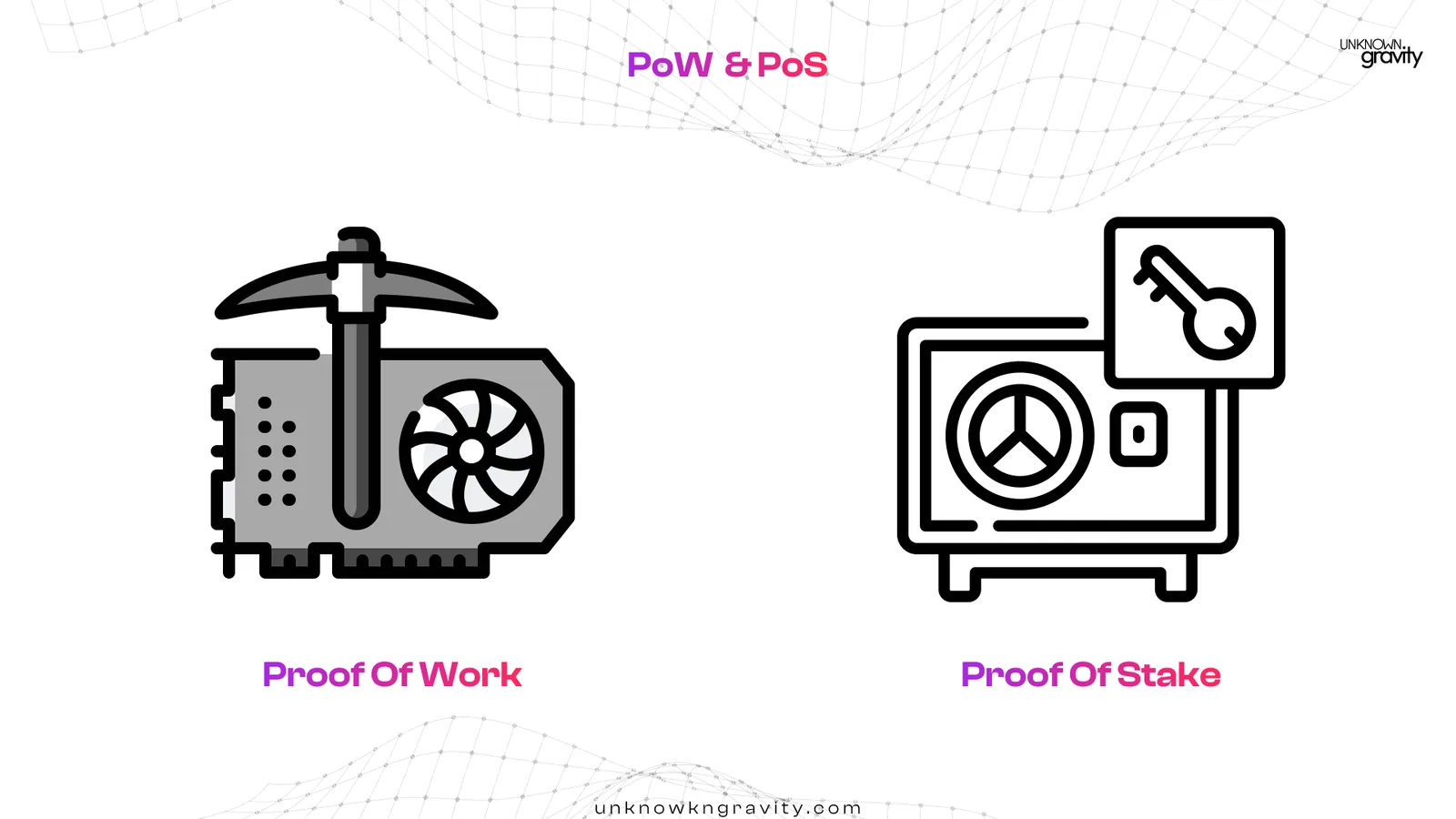
In the Proof of Work of Bitcoin, miners compete to solve complex mathematical problems, known as hashes, that require significant computational power. These problems are designed so that the solution is difficult to find, but easy to verify. When a miner succeeds in solving the problem, they validate a block of transactions and add it to the Bitcoin blockchain.
This process, known as “mining”, guarantees the security and integrity of the network, since the likelihood of a malicious individual controlling the network by resolving these problems in a consistent manner is extremely low. The reward for mining work comes in the form of new bitcoins and transaction fees, encouraging participation and keeping the network decentralized and secure. To mine bitcoin, mining rigs are used, which are computer systems specifically designed to mine cryptocurrency.

On the other hand, blockchains such as Ethereum they use Proof of Stake (PoS), which is a consensus mechanism in blockchain that differs from Proof of Work. In PoS, the choice of the validator to create a block is based on the amount of cryptocurrencies they hold and are willing to “bet” or stake in English. This reduces the need to solve complex computational problems, reducing energy consumption.
If you want to know more about Bitcoin and Ethereum click here.
Practical Applications of Blockchain
The impact of blockchain extends beyond cryptocurrencies. Sectors such as supply chain, healthcare and copyright management have adopted this technology to improve efficiency and transparency. Exploring these practical applications provides a comprehensive view of how blockchain is transforming different industries.
In the supply chain, for example, blockchain is used to track the origin and location of products, providing an immutable record that reduces the risk of fraud and improves visibility throughout the chain. Leading companies in the sector, such as Walmart, have implemented blockchain-based solutions to ensure the authenticity and freshness of products.
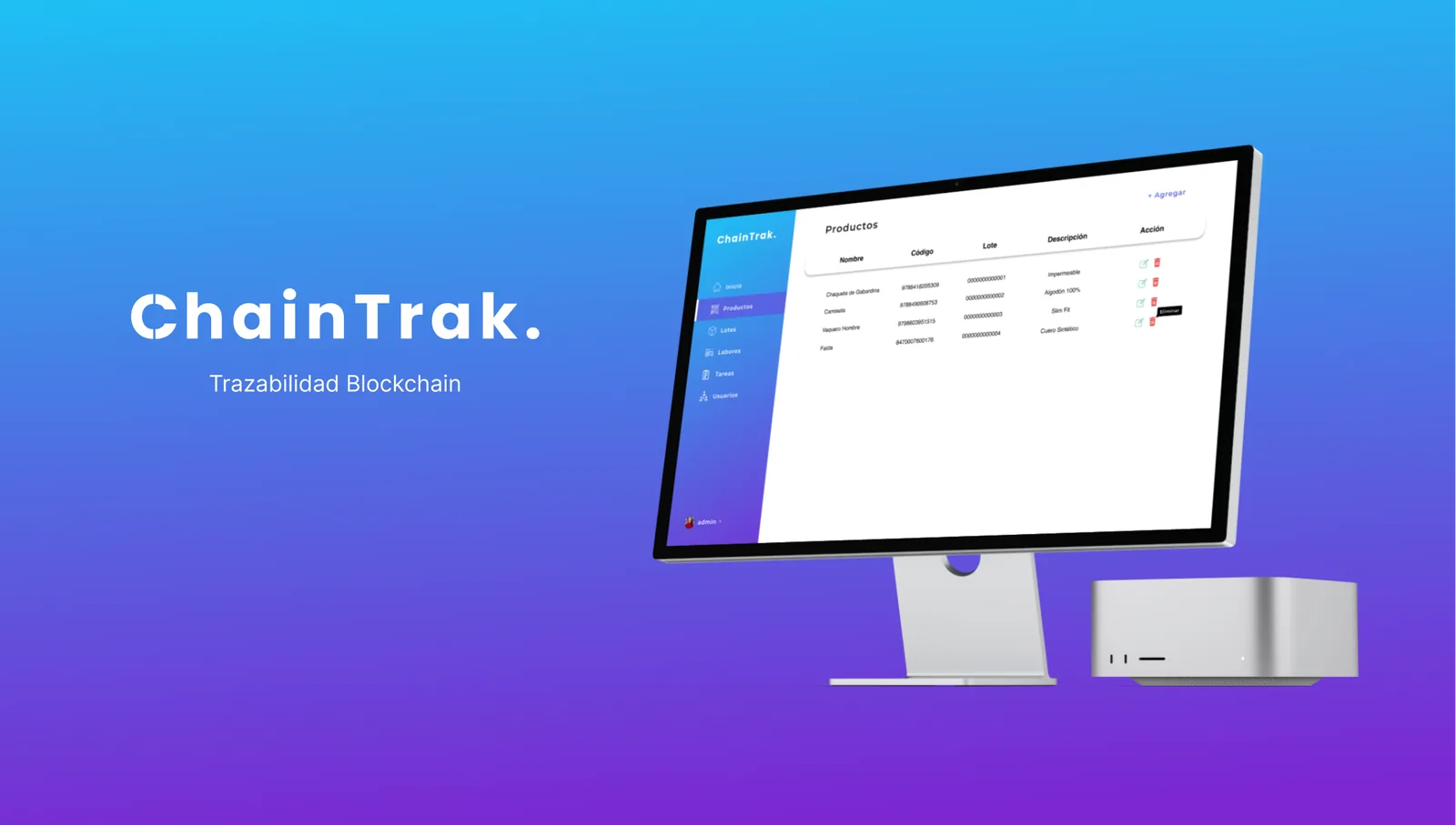
A clear example of this is Chaintrak, a dApp developed by Unknown Gravity which is designed to provide follow-up from production, distribution and sale. In simple words, this helps you to know the complete process of your product, in order to give authenticity to what you are selling or buying.
In the healthcare field, blockchain facilitates the secure exchange of data between providers and guarantees the integrity of electronic medical records. A patient's medical record, securely stored on a blockchain, can be accessible only with the patient's consent, improving coordination and quality of care.
Social and Ethical Impact of Blockchain
One of the highlights is its contribution to financial inclusion. Blockchain has allowed communities without access to traditional banking services to participate in the global economy. By creating secure digital identities and facilitating payments without intermediaries, blockchain has opened economic opportunities for those excluded from the conventional financial system.
In addition, in the field of privacy, blockchain offers innovative solutions. The ability to store data in a secure and decentralized way can empower individuals by providing them with greater control over their personal information. This decentralized approach contrasts with centralized models where large corporations manage vast amounts of data, often raising concerns about privacy.
Challenges and Future of Blockchain
However, as we explore the social and ethical impact of blockchain, we must also be aware of the challenges. Decentralization can increase the risk of illegal activities, such as money laundering or terrorist financing. Blockchain's inherent transparency means that transactions are visible to everyone, raising questions about how to balance individual privacy with the need to maintain network integrity.
Equity is also a central issue. Although blockchain can be a democratizing force, it's essential to address the digital divide to ensure that everyone has equal access and opportunity to benefit from this technology. Education and the promotion of ethical practices are essential to mitigate potential negative impacts and ensure that blockchain contributes positively to social well-being.
While blockchain has proven to be a promising innovation, it's not without its challenges. Scalability, interoperability, and regulatory concerns are issues that must be addressed to achieve more widespread adoption. Scalability, which refers to the network's ability to handle a large number of transactions, is a constant challenge that blockchain developers seek to overcome by implementing improvements and innovative solutions.
Interoperability, which refers to the ability of different blockchains to interact with each other, is another crucial challenge in achieving mass adoption. Efforts to develop common standards and interoperability protocols are under way, with the goal of creating a more connected and collaborative ecosystem.
Conclusions
In conclusion, blockchain technology has emerged as a fundamental pillar in the digital age. Its ability to provide security, transparency and decentralization makes it a powerful tool with a significant impact in multiple fields. By understanding its foundations, exploring its history and examining its applications, we can appreciate the magnitude of the revolution that blockchain has unleashed and its crucial role in the transformation of our digital society.
As technology continues to evolve, blockchain is expected to play an even more significant role in creating innovative solutions and redefining the way we interact with information and carry out transactions in the digital world. The history of blockchain is a fascinating journey that has led to the creation of a technological paradigm that will continue to impact our digital future in ways that we cannot yet fully imagine.