Smart contracts are used wherever a transfer should execute by itself the moment a condition is verified: releasing a deposit on delivery, paying a delay insurance claim from airline data, or distributing a coupon among holders. They automate execution, but they do not replace the legal contract that gives them validity.
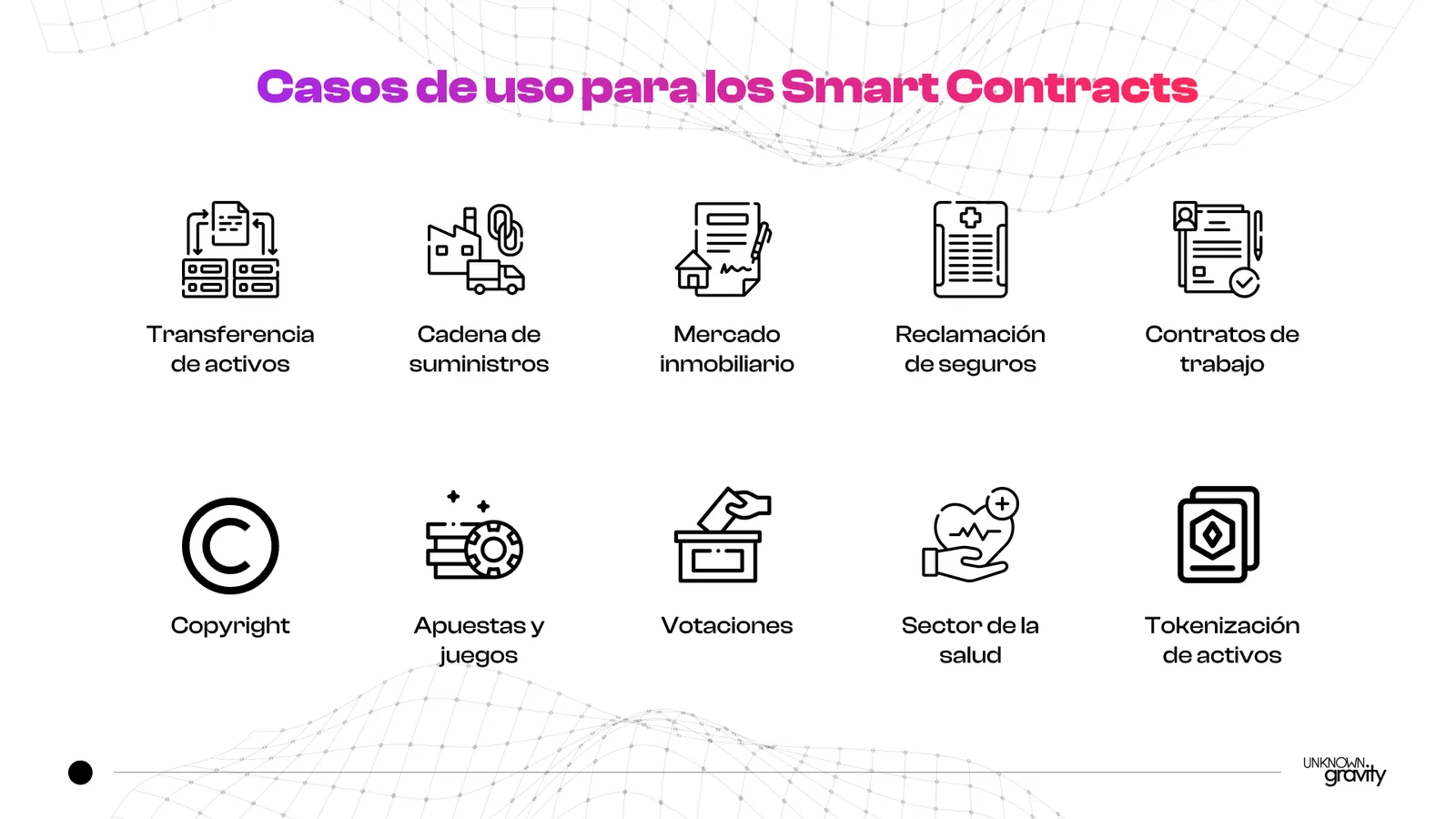
Smart contracts are used wherever a transfer must happen automatically once a condition is verified: releasing escrowed funds when goods are delivered, paying a flight-delay insurance claim from an airline feed, moving a tokenised share when payment clears, or splitting royalties among several owners. What every case needs is a trigger a machine can check, not a legal clause someone has to interpret.
The nine sectors below follow that same pattern. If you are weighing one of them, note that a deployed contract cannot be patched, so the code review before publishing is a separate piece of work: smart contract auditing.
Smart contracts or smart contracts, are computer programs that execute when certain predefined conditions are met. These digital contracts allow the transfer of digital assets securely and transparently without the need for intermediaries.
Next, we will explain what smart contracts are, examples of their application in different sectors and the various applications they offer.
Key Findings
- Smart contracts are automatic online agreements that are activated only when certain conditions that have already been established previously are met.
- They allow the transfer of digital assets securely and transparently without intermediaries.
- Smart contracts offer process automation, identity management, asset tokenization, voting, rental contracts and supply chain optimization.
- They stand out for their greater efficiency, transparency and cost reduction compared to traditional contracts.
What are smart contracts?
Definition of smart contracts
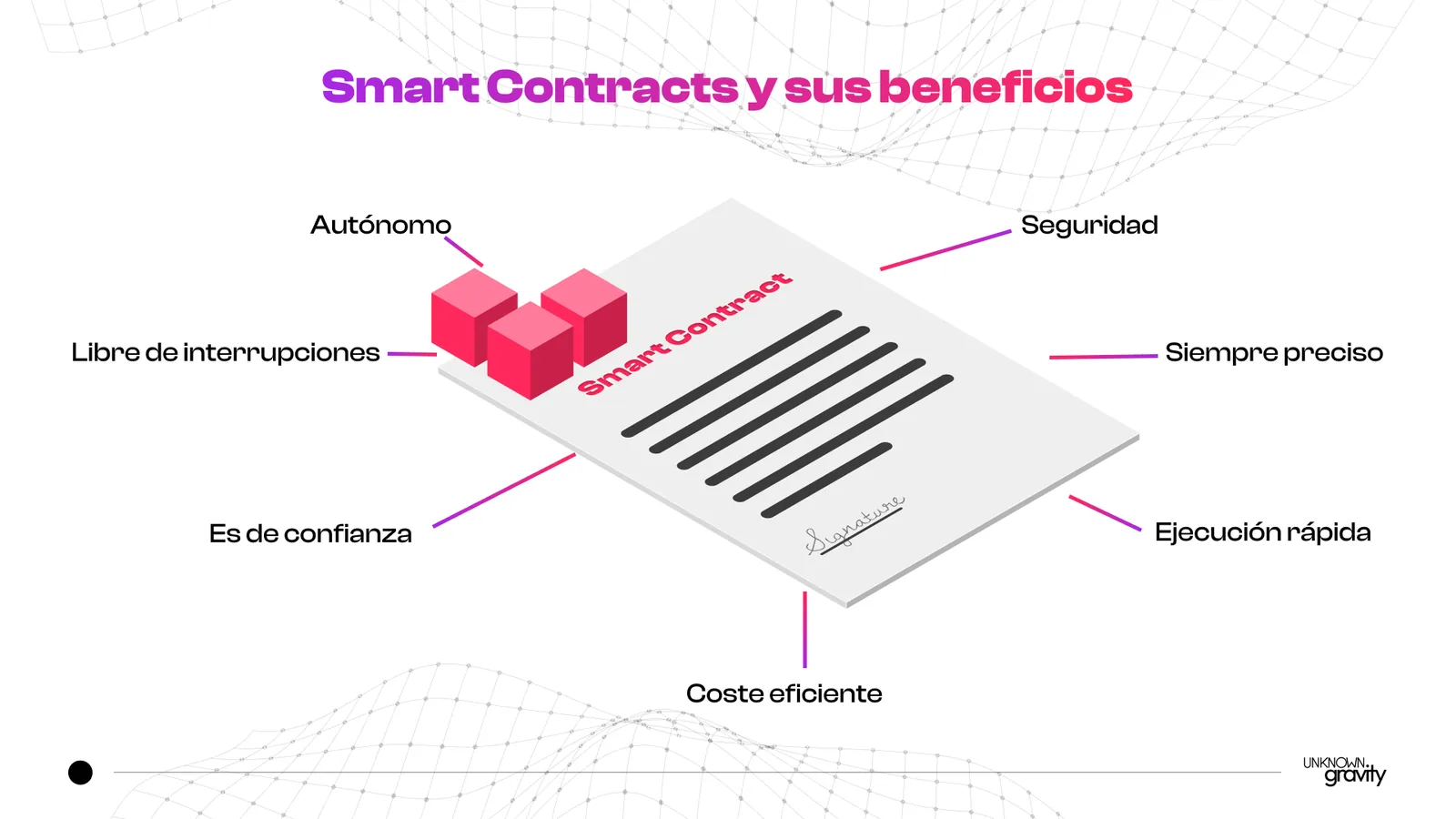
Smart contracts are computer applications designed to execute automatically by verifying specific pre-established conditions. These contracts are written in specific programming languages and are stored on a blockchain, which guarantees their immutability and transparency.
Smart contracts make it possible to automate operations. Eliminating dependence on intermediaries, reducing associated costs and deadlines. When implemented, they provide security and reliability, compared to conventional contracts.
Some examples of conditions that can activate a smart contract include meeting deadlines, paying a specific amount of money, or verifying certain data. Once these conditions are met, the contract is executed automatically, without the need for human intervention.
Characteristics of smart contracts
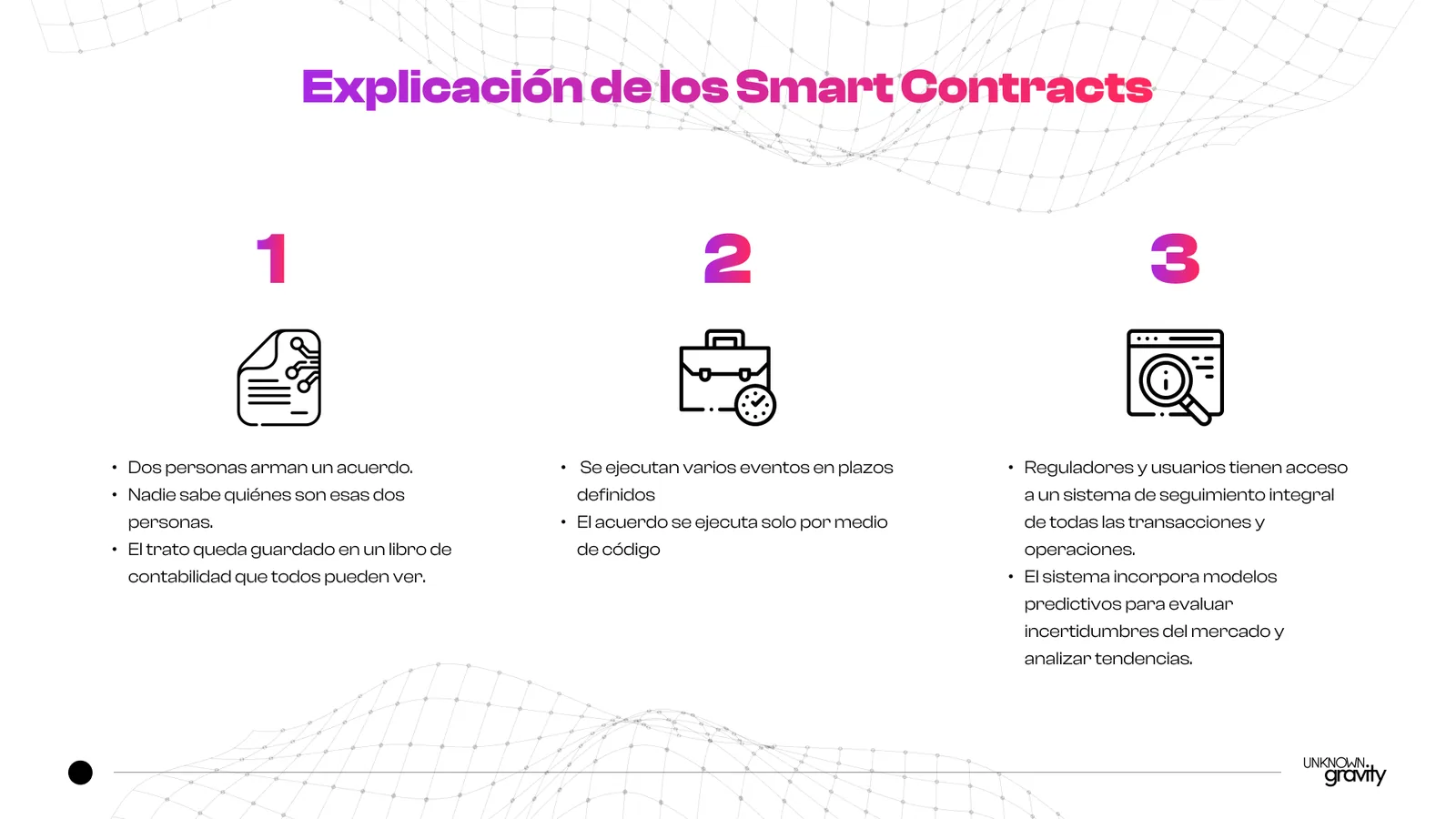
Smart contracts have several characteristics that make them unique and powerful in the field of blockchain technology:
- Automation: Smart contracts allow the automatic execution of agreements and transactions without the need for intermediaries.
- Security: Thanks to cryptography and the decentralization of the blockchain, smart contracts have solid protection that makes them reliable and resistant to manipulation.
- Transparency: All transactions made through smart contracts are recorded on the blockchain, which guarantees the transparency and traceability of operations.
- Efficiency: Smart contracts eliminate the need for manual processes and reduce the costs and times associated with brokerage.
- Programming Capacity: Smart contracts are computer codes, which have been designed to execute specific actions when predetermined conditions are met.
Advantages of smart contracts
Smart contracts provide several advantages over traditional contracts. Some of these benefits include:
- Efficiency: Smart contracts streamline processes and ensure efficient execution.
- Transparency: The blockchain technology of smart contracts allows all transactions to be recorded in an immutable and transparent way.
- Security: Smart contracts are based on advanced cryptography, which guarantees the integrity of the agreements and protects sensitive information.
- Confianza: By eliminating intermediation, smart contracts promote more direct and transparent business relationships between the parties involved.
- Reducing costs: By automating processes and eliminating intermediaries, smart contracts can help reduce the costs associated with executing traditional contracts.
Examples of smart contracts
Smart contracts in the financial sector
Smart contracts are revolutionizing the financial sector by offering a secure and efficient way to carry out transactions. These digital contracts allow the automatic execution of financial agreements without the need for mediators, streamlining processes and reducing expenses.
In addition, they provide transparency and traceability, since all transactions are recorded on the blockchain. This provides greater security for participants and reduces the risk of fraud.
Some examples of smart contracts in the financial sector include:
- Peer-to-peer lending: They allow the automatic creation and execution of loan contracts between individuals, eliminating the need for a bank as an intermediary.
- International payments: They simplify fast international payments, eliminating the costs and delays associated with traditional systems.
- Digital asset trading: They play a crucial role in the secure and transparent exchange of digital assets, such as cryptocurrencies.
In short, smart contracts are transforming the financial industry by offering an efficient alternative for carrying out transactions and executing financial agreements.
Smart contracts in the insurance industry
Smart contracts have a variety of applications in the insurance industry. Some examples include:
- Automating Claims: Smart contracts can streamline and automate the process of filing and resolving claims, reducing the need for intermediaries and accelerating payments.
- Transparency and Trust: Through the use of smart contracts, transparency can be guaranteed in insurance contracts, since all conditions and terms are programmed and are visible to all parties involved.
- Fraud prevention: Smart contracts can help prevent fraud in the insurance industry by establishing clear rules and conditions that are automatically executed. This reduces the possibility of manipulation or malpractice.
- Data registration and validation: Smart contracts can be used to record and validate data relevant to insurance contracts, such as customer information, claim history and payments made.
Smart contracts in the health sector
Smart contracts have significant applications in the field of health. These tools can simplify the management of medical data and promote compatibility between different health systems. In addition, they enable the automation of the health insurance claims process, speeding up the reimbursement of medical expenses.
It can also be used to ensure the privacy and security of patient data, ensuring that only authorized parties have access to information. In short, smart contracts have the potential to improve effectiveness and clarity in the field of health, generating benefits for both medical service providers and patients.
Smart contract applicationsTS
Process automation
Smart contracts allow for the automation of processes in an efficient and secure manner. By eliminating the need for middlemen, transactions are streamlined and costs are reduced. In the same way, they have the ability to execute automatically when pre-established conditions are met, which optimizes time and prevents possible human errors.
In the financial field, smart contracts are used to streamline the loan process, verifying the eligibility of applicants and establishing the terms of the loan. This speeds up the process and reduces human intervention.
In the insurance industry, smart contracts automate the issuance of policies and the settlement of claims. It allows a more accurate response to insured events, eliminating the need for manual processes and reducing fraud.
In the field of health, smart contracts simplify the administration of electronic medical records and enable the secure exchange of information between different healthcare providers. This dynamic helps to optimize both the efficiency and quality of medical services, while safeguarding patients' privacy.
Identity Management
Identity management is one of the most important applications of smart contracts. These contracts allow the creation of secure and reliable systems for verification; their utility is most prominent in various contexts. Such as the authentication of users on digital platforms or the verification of identity in financial transactions. Smart contracts establish rules and conditions, ensuring the integrity and security of personal data.
Smart contracts can facilitate the secure exchange of information between different entities, such as financial institutions or service providers. This speeds up verification processes and reduces the risk of errors or fraud. In short, identity management using smart contracts offers an efficient and secure solution for verification in different areas
Asset tokenization
Asset tokenization is one of the most promising functions of smart contracts. It allows physical or virtual assets to be represented as digital tokens on a blockchain. This makes it easier to transfer and trade assets more efficiently and securely.
Among the assets that can be “tokenized” are real estate, works of art, company shares and intellectual property rights, to name a few.
Asset tokenization offers several advantages such as the divisibility of assets, the reduction of intermediaries and the possibility of access to smaller investments. In addition, it allows the creation of more liquid and transparent secondary markets.
In short, the tokenization of assets using smart contracts has the potential to radically change the way in which various types of assets are invested, traded and accessed.
Voting and elections
Smart contracts present a secure and clear solution for the voting and election process. Blockchain technology eliminates the possibility of fraud and manipulation of results. In addition, smart contracts make it possible to automate the counting of votes and to speed up the counting process.
Some advantages of using smart contracts in voting and elections are:
- Increased confidence in the results
- Reduction of costs and times
- Elimination of intermediaries
Important: Ensuring the security and privacy of voter data is essential to ensure the integrity of the electoral process.
Rental contracts
Smart contracts can also be used in the field of rental contracts. These advanced contracts make it possible to automate and optimize the property lease process, eliminating dependence on third parties and minimizing expenses. Some of the advantages of using smart contracts in rental contracts are:
- Increased transparency: All information related to the rental agreement is recorded on the blockchain, ensuring transparency and avoiding potential disputes.
- Payment automation: Smart contracts can be programmed to automatically make rent payments, avoiding delays or defaults.
- Safety and Trust: By using blockchain technology, rental contracts become more secure and reliable, since information cannot be modified or manipulated.
- Reducing costs: By eliminating intermediaries and streamlining the process, smart contracts make it possible to reduce the costs associated with rental contracts.
Supply chain management
Supply chain management is one of the most promising applications of smart contracts. These smart contracts make it possible to automate and streamline product tracking and traceability processes along the entire supply chain.
By using smart contracts, the clarity and integrity of information is ensured, preventing deception and human error. They also establish specific conditions and rules for each phase of the chain, simplifying coordination between the different participants.
In short, smart contracts in supply chain management offer greater efficiency, security and trust in business operations.
Conclusion
In short, smart contracts represent a technological innovation that has found multiple applications in different fields. Its ability to automate and ensure the execution of agreements without intermediaries has proven to be of great use in areas such as finance, logistics and intellectual property.
As blockchain technology continues to evolve, we're likely to see even more examples of smart contracts transforming the way we do business. It's important to be aware of these innovations and explore how they can benefit our society.
FAQs
What is a smart contract?
A smart contract, or smart contract, is a computer program that automatically executes when certain pre-established conditions are met. It is designed to facilitate, verify and enforce the negotiation or execution of a contract without the need for intermediaries.
How do smart contracts work?
Smart contracts work using blockchain technology. Once the contract conditions are established and implemented on the blockchain, it is automatically activated when the specified conditions are met. The execution of the contract is recorded and verified on the blockchain, ensuring the transparency and immutability of transactions.
What are the advantages of smart contracts?
Some of the advantages of smart contracts are: the elimination of intermediaries, the reduction of costs, the automation of processes, the transparency, security and immutability of transactions.
Which sectors can benefit from smart contracts?
Smart contracts can benefit various sectors, such as finance, insurance, health, supply chain management, voting and elections, among others.
What are the applications of smart contracts?
Several of the applications of smart contracts include process automation, identity management, asset tokenization, voting and elections, rental contracts, and supply chain management.
What happens if the conditions of the smart contract are not met?
If the conditions of the smart contract are not met, the contract is not executed and the associated transactions are not performed. This ensures that the parties involved comply with what was agreed and prevents possible fraud or non-compliance.