Solidity is the dominant language for contracts on Ethereum and compatible chains, which gives it the largest ecosystem of tooling and auditors. Vyper favours simplicity to reduce errors, and Rust is used on networks such as Solana. The target network determines the choice, not the team's preference.
Smart contracts are programs that run on a blockchain, automating agreements and transactions without the need for intermediaries. Its growing adoption is transforming industries, offering new ways to manage assets and fulfill contracts in a secure and transparent manner.
Given their importance, choosing the right programming language for developing smart contracts is crucial. This article analyzes and compares several languages used in this field, evaluating them in terms of ease of use, security, performance, community and support, and available tools and documentation.
Comparison Criteria
To evaluate smart contract programming languages, the following criteria have been selected:
- Ease of Use: How simple is it to learn and use language?
- Safety: How secure is the language against common vulnerabilities?
- Performance: How does language perform in terms of efficiency and speed?
- Community and Support: How active and useful is the developer community?
- Tools and documentation: How robust and accessible are the available tools and documentation?
Analyzed Programming Languages
Solidity
Solidity is the most popular programming language for smart contracts on the Ethereum blockchain. Its syntax is similar to JavaScript, making it easier for many developers to learn.
Advantages:
- Broad adoption and community support.
- Extensive documentation and educational resources.
- Integration with most tools and development environments.
Disadvantages:
- History of security vulnerabilities in poorly written contracts.
Vyper
Vyper is a high-level programming language that is also used in the Ethereum blockchain. It's designed to be more secure and easier to audit than Solidity.
Advantages:
- Increased emphasis on safety.
- Simpler and less error-prone syntax.
Disadvantages:
- Fewer tools and resources compared to Solidity.
- Smaller and growing community.
Rust
Rust is a system programming language used in the Solana blockchain, known for its high efficiency and performance.
Advantages:
- High performance and efficiency.
- Security in memory management, preventing common errors such as buffer overflows.
Disadvantages:
- Steeper learning curve.
- Community and resources specific to smart contracts still under development.
Michelson
Michelson is the programming language used by the Tezos blockchain. It's a stack language, designed for smart contracts.
Advantages:
- High security and formally verifiable.
- Strong emphasis on code correctness.
Disadvantages:
- Syntax and concept less familiar to many developers. Less accessible tools and documentation.
Plutus
Based on Haskell, a language known for its security and precision. Good integration with Cardano development tools.
Advantages:
- Based on Haskell, a language known for its security and precision.
- Good integration with Cardano development tools.
Disadvantages:
- It requires knowledge of Haskell, which is not commonly used.
- Community and resources are still growing.
Detailed Comparison
Ease of use
- Solidity: Similar to JavaScript, relatively easy to learn.
- Vyper: Simple syntax, designed to be easy to read and audit.
- Rust: More complex due to memory and concurrency management.
- Michelson: Less intuitive syntax, greater learning curve.
- Plutus: Based on Haskell, it requires familiarity with functional programming.
Security
- Solidity: History of vulnerabilities, but constant improvements.
- Vyper: Focus on simplicity and security.
- Rust: Security in memory management.
- Michelson: High level of security and formal verification.
- Plutus: Security derived from Haskell and its functional model.
Performance
- Solidity: Suitable for Ethereum, but can be expensive in terms of gas.
- Vyper: Similar to Solidity, but with fewer optimizations.
- Rust: Very high performance, suitable for Solana.
- Michelson: Optimized for Tezos, good performance.
- Plutus: Good performance, but it depends on the Cardano ecosystem.
Community and support
- Solidity: Great community, lots of resources available.
- Vyper: Smaller but growing community.
- Rust: Active Rust community, growing in the blockchain space.
- Michelson: More technical and specialized community.
- Plutus: Expanding Haskell and Cardano community.
Tools and documentation
- Solidity: Extensive tools and documentation.
- Vyper: Fewer tools, but good documentation.
- Rust: Good tools for systems, documentation under development for blockchain.
- Michelson: Technical and specific tools and documentation.
- Plutus: Good tool support in the Cardano ecosystem.
Case Studies
The case studies provide practical and real examples of how different programming languages for smart contracts have been used in successful projects. Here are some outstanding examples for each language.
Solidity: Uniswap and CryptoKitties
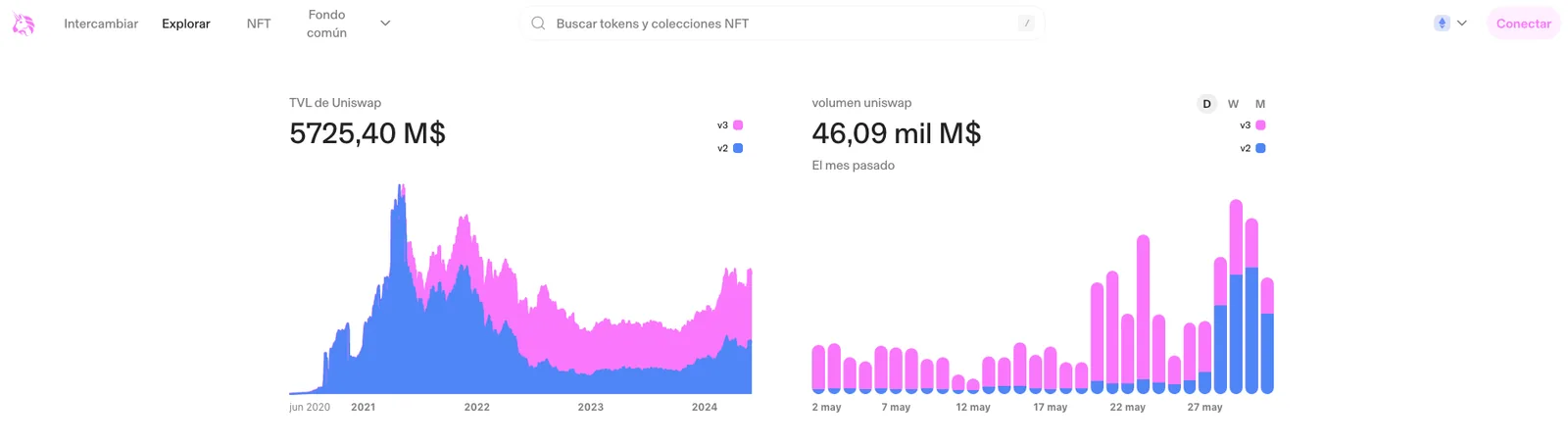
Uniswap is one of the most popular decentralized exchange protocols on the Ethereum blockchain. It uses smart contracts to facilitate the exchange of tokens without intermediaries. Solidity allowed for a quick and efficient implementation, although developers had to face challenges related to safety and gas optimization.
CryptoKitties is a blockchain-based game that allows users to buy, sell and breed unique virtual cats using smart contracts. The high demand for CryptoKitties caused congestion in the Ethereum network, highlighting the need to improve scalability and gas efficiency in Solidity.
Vyper: Curve Finance and Yearn Finance
Curve Finance is a decentralized exchange optimized for the efficient exchange of stablecoins. Vyper offered greater security and simplicity in the code, making auditing easier and reducing the risk of critical contract errors. Although he did not get rid of a major hack in July 2023.
Yearn Finance is a platform that optimizes the performance of DeFi investments by pooling and redistributing funds across various protocols. The use of Vyper contributed to the creation of more secure and auditable contracts, crucial for user trust in investment platforms.
Rust: Serum and Mango Markets
Serum is a decentralized exchange and financial services ecosystem built on Solana, known for its high speed and low transaction cost. Rust allowed the creation of high-performance and secure smart contracts, highlighting the importance of choosing an efficient language for applications that require high speed and low cost.
Mango Markets is a decentralized cryptocurrency trading platform that offers margin trading and lending. The robustness and efficiency of Rust were key to the success of Mango Markets, allowing complex operations to be managed with high security and performance.
Michelson: Tezos Domains and Kolibri
Tezos Domains allows users to register and manage domain names on the Tezos blockchain. Michelson, with its focus on formal verification and security, provided a solid foundation for the development of critical services such as domain registration.
Kolibri is a platform for issuing a decentralized stable currency called kUSD. The kUSD stablecoin is backed by XTZ (Tezos's native token) and is designed to keep its value stable relative to the U.S. dollar. Kolibri's smart contracts are written in Michelson, allowing for formal verification and greater security in the management of collateral and the issuance of the stablecoin.
Plutus: Liqwid Finance and SundaeSwap
Liqwid Finance is a decentralized lending protocol built on the Cardano blockchain. Plutus enabled a secure and reliable implementation, highlighting the importance of a Haskell-based language for complex financial applications.
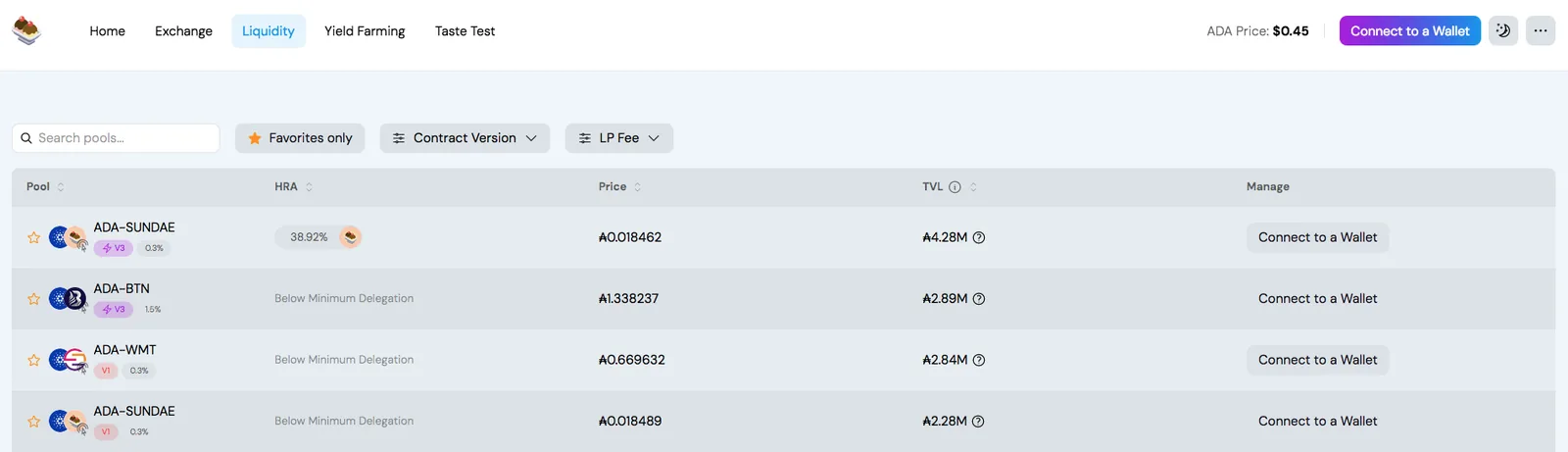
SundaeSwap is a decentralized exchange on the Cardano blockchain, designed to offer an intuitive and efficient user experience. The use of Plutus allowed the creation of a secure and well-structured platform, benefiting from the functional programming and robustness of Haskell.
Future of Programming Languages for Smart Contracts
The development of smart contracts is constantly evolving, driven by growing needs for security, efficiency and usability. Below are some of the emerging trends, innovations and future developments in this field, as well as their potential impact on the blockchain industry.
Cross-chain interoperability
The ability of smart contracts to interact across different blockchains will be a key trend. This will allow the creation of more complex and robust applications that can take advantage of multiple platforms.
Protocols such as Polkadot and Cosmos are already working on interoperability solutions, which could boost the adoption of languages that facilitate this communication between chains.
Standardization and formalization
Greater standardization is expected in smart contract programming languages, which will facilitate formal auditing and verification. Initiatives such as ERC (Ethereum Request for Comments) and proposals to improve other blockchain ecosystems are moving in this direction.
Formalization using mathematical and logical tools will help minimize errors and increase the security of smart contracts.
High-level languages and abstraction
The development of more abstract and high-level languages will allow developers to focus more on business logic than on implementation details. This can improve productivity and reduce the risk of errors.
Examples such as Move (used by Diem, formerly known as Libra) demonstrate the trend towards languages designed specifically for smart contracts, with advanced security and efficiency features.
Security improvements
Future programming languages will more deeply integrate static and dynamic analysis tools, as well as formal verification techniques, to identify and mitigate security vulnerabilities.
Standardized security frameworks and libraries will be developed to simplify the implementation of secure practices in smart contracts.
Optimizing performance
Improvements in language efficiency will make it possible to handle a higher volume of transactions at a lower cost. This includes optimizations in code execution and resource management.
The adoption of advanced compilers and optimized virtual machines (VMs) will help improve the performance of smart contracts.
Conclusion
The choice of programming language for smart contracts is fundamental to the success of a blockchain project. This article compared the Solidity, Vyper, Rust, Michelson and Plutus languages, highlighting their advantages and disadvantages.
Solidity, the most popular in Ethereum, offers a wide community and resources, but faces security challenges and gas costs. Vyper, although less commonly used, emphasizes security and simplicity, making it ideal for projects that prioritize auditability. Rust, used in Solana, stands out for its high performance and security in memory management, suitable for applications that require efficiency. Michelson on Tezos provides security and formal verification, although its syntax can be complex for some developers. Plutus on Cardano, based on Haskell, offers robustness and security, suitable for complex financial applications, although it requires more specific knowledge.
The future of programming languages for smart contracts is promising, with trends toward interoperability, standardization, and the development of high-level languages. Innovations in security, performance and integration with emerging technologies will drive their adoption and application in diverse industries.