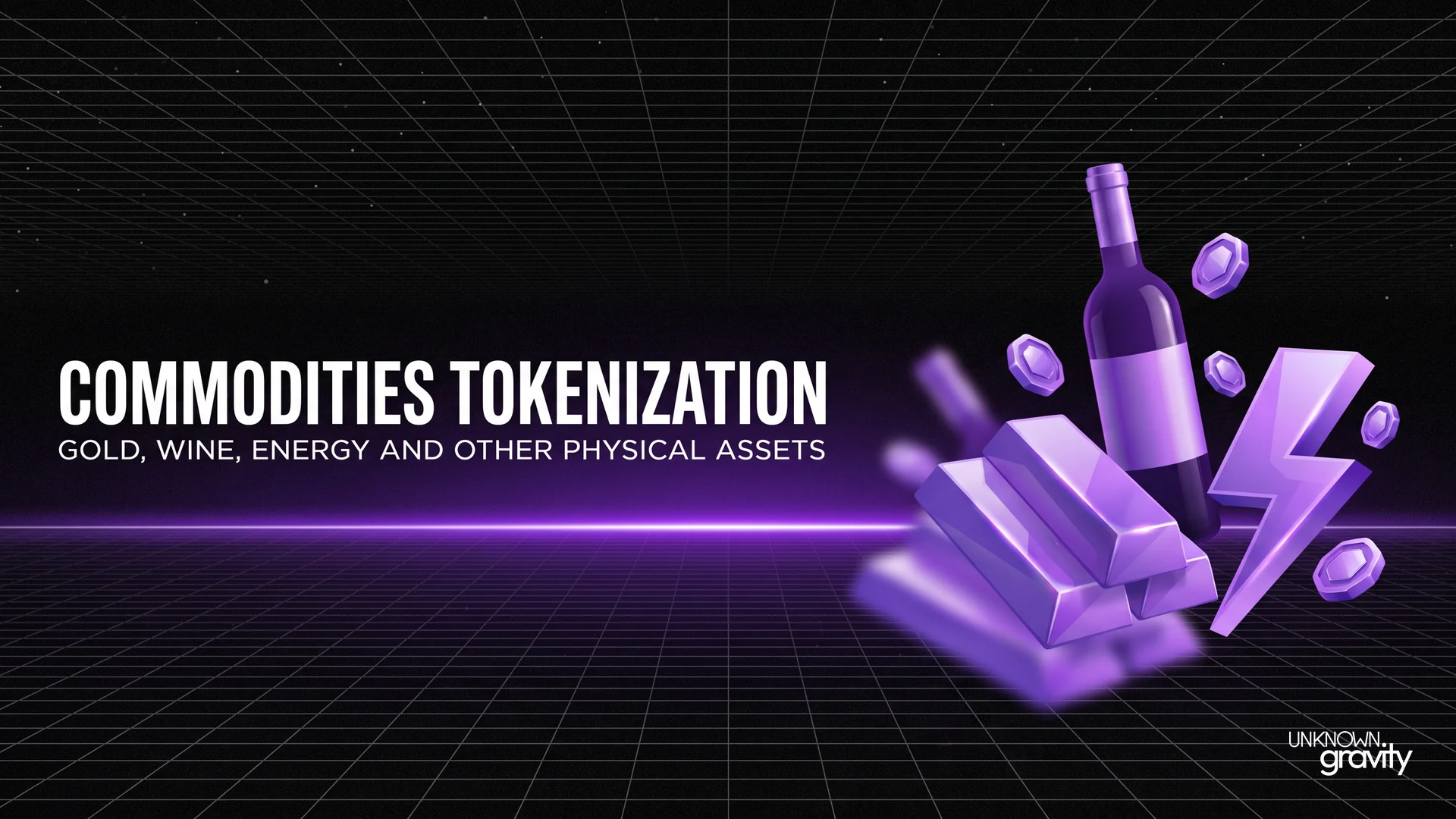
Tokenizing commodities such as gold, wine or energy means issuing tokens that represent rights over those physical assets, and the question that settles everything is what kind of right. If the token delivers a specific, custodied good, it resembles a delivery title. If it grants a share in an economic result managed by someone else, it moves towards a transferable security.
What is commodity tokenization
La Tokenization of raw materials consists of representing in digital form, through blockchain tokens, physical assets such as gold, wine, energy or any commodity.
These tokens make it possible to split, trade and transfer rights to real assets in an efficient, secure and transparent manner.
This process converts traditional assets into tokenized digital assets, expanding its liquidity and accessibility for investors of all types, from individuals to large funds.
Main tokenized commodities
Tokenized gold
Gold has historically been a safe haven.
With tokenization, tokens are issued backed by physical quantities of gold stored in secure custody.
This makes it possible to buy and sell gold in small fractions, without the need to manage the physical asset, reducing costs and risks.
Tokenized wine
High-quality wine is also becoming a tokenized asset.
Tokens represent lots or bottles stored in certified warehouses, facilitating investment and trade in a traditionally illiquid and exclusive market.
Tokenized energy
Energy, especially renewable energy, can be tokenized to represent rights to production or consumption.
For example, tokens that represent green energy certificates or participation in solar or wind projects, opening up new ways to finance and commercialize energy.
Other raw materials
From silver, oil, to agricultural products, tokenization opens up possibilities to transform any Commodity in a tradable asset on blockchain, facilitating more accessible and transparent global markets.
Benefits of Tokenizing Commodities
- Increased liquidity: fragmentation of physical assets into tradable tokens.
- Global access: investors from anywhere in the world can participate.
- Transparency and traceability: blockchain guarantees origin and ownership.
- Reduction of intermediaries: simplification of processes and costs.
- Financial Innovation: new investment and financing models.
Challenges and Considerations
- Custody and warranty: ensure that physical assets actually support the issued tokens.
- Regulation: comply with financial and intellectual property laws.
- Volatility and valuation: determine the fair value of the tokens and how it fits the physical asset.
- Market education: give investors confidence in the safety and usefulness of these new digital assets.
Conclusion
The tokenization of commodities represents an important evolution in the way of investing in traditional physical assets.
From gold to energy, this innovation makes it possible to democratize access and create new, more dynamic and accessible markets.
If you want to explore how to tokenize your physical assets or participate in blockchain commodity markets, tokenization is the gateway to a more innovative and efficient financial future.